
“But be doers of the word, and not hearers only, deceiving yourselves.” James 1:22 (NKJV)
A particular frustration comes from knowing what the Bible teaches and still doing the opposite. You lose your patience, speak too sharply, allow worry to control your thoughts, or respond to someone in a way you later regret.
Then comes another uncomfortable feeling: you knew better.
It’s a double burden. You’re struggling with your emotions while simultaneously recognizing that your response doesn’t align with God’s Word. Sometimes the disappointment of knowing you’ve disobeyed weighs almost as heavily as the original problem.
But remember this: recognizing where we fall short can begin spiritual growth, provided we let God’s Word correct us rather than condemn us.
When God’s Word Becomes a Mirror
James understood the difference between hearing God’s Word and allowing it to change our behavior. He illustrated that difference with an ordinary mirror.
James 1:23–24 (KJV)
“For if any be a hearer of the word, and not a doer, he is like unto a man beholding his natural face in a glass: For he beholdeth himself, and goeth his way, and straightway forgetteth what manner of man he was.”
James was writing to believers facing real pressures and temptations. His message wasn’t simply about accumulating biblical knowledge. He challenged Christians to demonstrate genuine faith through their conduct.
Think about that mirror.
When we read Scripture, God sometimes reveals attitudes we’d rather overlook: impatience, pride, resentment, selfishness, or an unwillingness to forgive.
The question isn’t whether the mirror reveals something uncomfortable. The question is what we do after seeing it.
We can close our Bibles and continue behaving as before, or we can acknowledge what God has revealed and invite Him to help us change.
Knowing the truth is important. Responding to it is where obedience begins.
The Holy Spirit Makes the Difference
Here’s where many Christians become discouraged. We know what God expects, sincerely want to obey, and still sometimes fail.
Why?
Because understanding a biblical principle doesn’t automatically eliminate years of emotional habits, personal weaknesses, or deeply ingrained reactions.
Yet God never intended us to navigate spiritual growth through willpower alone.
Philippians 2:13 (KJV)
“For it is God which worketh in you both to will and to do of his good pleasure.”
Paul wrote these words while encouraging believers to live faithfully and responsibly before God. Notice the beautiful partnership: we are called to obey, yet God Himself works within us, shaping both our desires and our actions.
That changes our perspective considerably.
The Holy Spirit isn’t merely someone we acknowledge during worship. He dwells within believers, helping us recognize God’s truth, confront temptation, and develop Christlike character.
Galatians 5:22–23 (KJV)
“But the fruit of the Spirit is love, joy, peace, longsuffering, gentleness, goodness, faith, meekness, temperance: against such there is no law.”
These qualities don’t develop instantly. They mature as we continually yield ourselves to God.
When we fail, we don’t have to stay trapped in shame.
Romans 8:1 (NIV)
“Therefore, there is now no condemnation for those who are in Christ Jesus,”
Paul’s assurance rests on what Christ has accomplished, not on our ability to maintain a flawless record.
God’s grace doesn’t excuse disobedience. It invites us to repent, receive His forgiveness, and continue growing.
Build the Bridge Between Knowing and Doing
Consider an ordinary situation.
You’ve been reading about patience and kindness. Later that afternoon, someone makes an irritating comment, questions your judgment, or treats you unfairly.
Immediately, your emotions rise.
You know what Scripture teaches. But now comes the real test: Will you let God’s Word shape your response?
This is where we can build what I call the Word-to-Life Bridge.
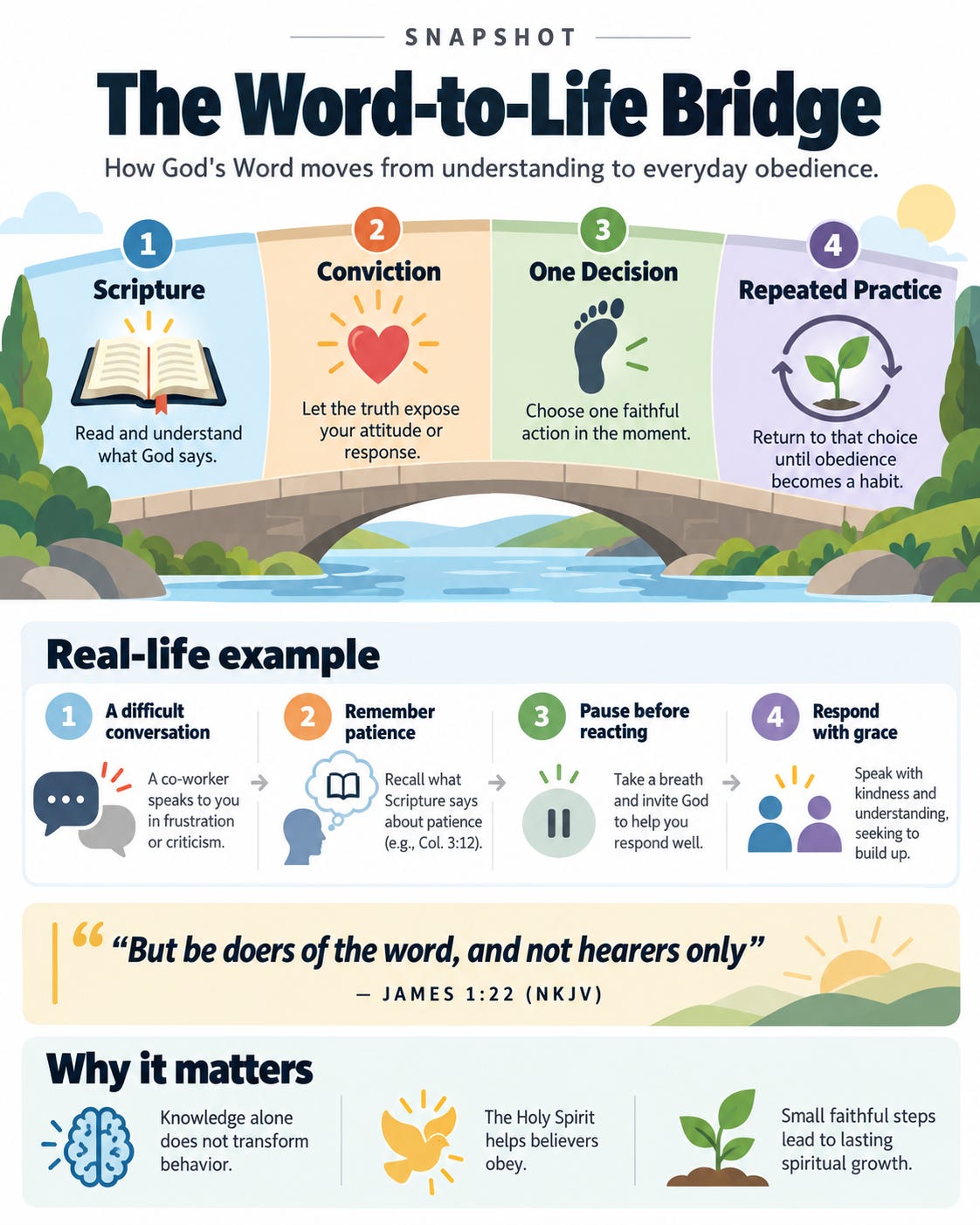
First, remember the biblical truth. Next, recognize where it challenges your attitude. Then make one deliberate decision consistent with God’s instruction. Finally, continue practicing that response whenever similar situations arise.
Perhaps you pause before speaking. Perhaps you listen instead of interrupting. Maybe you apologize when you realize your words have caused unnecessary hurt.
These actions may seem small, but they represent meaningful obedience.
God’s faithfulness also gives us confidence when temptation feels overwhelming.
1 Corinthians 10:13 (KJV)
“There hath no temptation taken you but such as is common to man: but God is faithful, who will not suffer you to be tempted above that ye are able; but will with the temptation also make a way to escape, that ye may be able to bear it.”
Paul’s teaching reminds us that temptation is part of the human experience, but surrendering to it is not inevitable. God provides what we need to endure temptation faithfully.
Sometimes that way forward is as simple as walking away, remaining silent, praying before responding, or asking the Holy Spirit to help us exercise self-control.
Over time, consistent obedience becomes part of a growing relationship with God.
Your Faith Is Built on What You Practice
Jesus illustrated the importance of obedience through two builders. One built his house upon rock, while the other built upon sand.
Both heard His teaching. Only one put it into practice.
Matthew 7:24 (KJV)
“Therefore whosoever heareth these sayings of mine, and doeth them, I will liken him unto a wise man, which built his house upon a rock:.”
When storms came, the foundation made the difference.
Jesus wasn’t promising a life without difficulties. He was teaching that hearing and practicing His words builds a foundation that can endure life’s challenges.
That brings our October journey full circle.
We’ve explored understanding Scripture in context, studying with purpose, and memorizing God’s promises. Each discipline matters because it draws us closer to the Lord and prepares us to respond faithfully.
Now comes the question that ties everything together: Will we live what we’ve learned?
This week, select one biblical teaching that speaks directly to a current struggle. Ask the Holy Spirit to reveal one specific opportunity to practice it, then take that step.
Don’t measure spiritual maturity by perfection. Look for a growing willingness to trust, obey, repent, and return to God.
Closing Prayer
Heavenly Father, thank You for Your living Word and the Holy Spirit who dwells within us. Help us move beyond simply knowing Your truth to practicing it faithfully, so our attitudes, decisions, and actions increasingly reflect Jesus Christ. Amen.
What if growing closer to God wasn’t about trying harder, but about making more room for His grace in your everyday life?
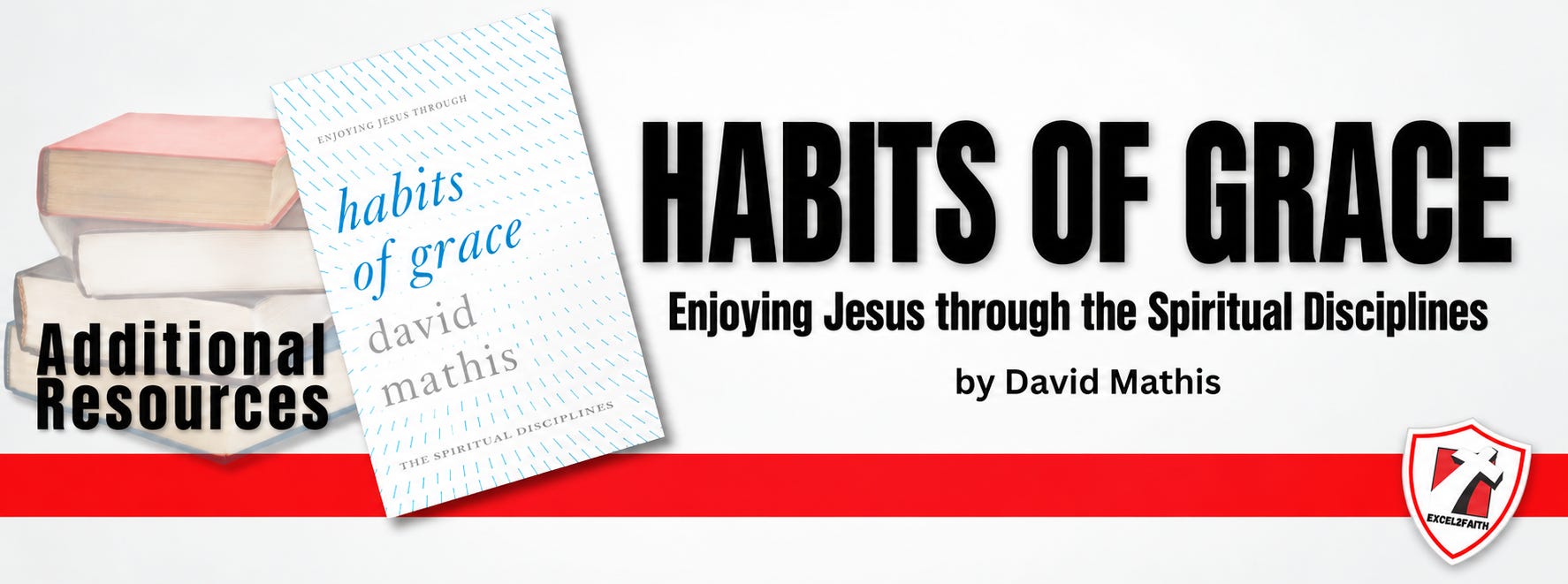
In Habits of Grace: Enjoying Jesus Through the Spiritual Disciplines, David Mathis offers a refreshing perspective on spiritual growth. Rather than presenting Christian disciplines as religious obligations, he reveals how ordinary practices become meaningful opportunities to experience God’s presence and transforming power.
Mathis organizes his teaching around three essential relationships: hearing God’s voice through Scripture, enjoying His presence through prayer, and growing alongside fellow believers through Christian fellowship.
Through practical guidance on Bible reading, meditation, Scripture memorization, prayer, and worship, he encourages readers to develop consistent spiritual rhythms without turning faith into another exhausting checklist.
This message beautifully complements our EXCEL2FAITH article, “You Know What the Bible Says. But Are You Living It?” Both remind us that spiritual maturity involves more than accumulating biblical knowledge. Genuine transformation develops as we continually respond to God’s Word and depend upon His grace.
If you’re ready to move beyond occasional inspiration toward a deeper, more consistent walk with Christ, this book deserves a place on your reading list.
Purchase Habits of Grace and subscribe to The EXCEL2FAITH Newsletter for more biblical encouragement and practical spiritual guidance.

Heavenly Father, we come before You with humble hearts, grateful for Your living Word, yet acknowledging that too often we know Your truth but struggle to reflect it in our attitudes, decisions, and actions. Lord, forgive us when we fall short, and through the power of Your Holy Spirit, give us the wisdom, courage, and strength to move beyond simply hearing Your Word to faithfully living it, even when obedience is difficult. Stir within us a deeper hunger for Your presence, drawing us into sincere and consistent prayer, meaningful time in Scripture, and an intimate relationship with You that transforms our hearts and renews our minds each day. Above all, Father, teach us to depend not on our own strength but on Your unfailing grace, so that every step of obedience brings us closer to You and allows others to see the love, compassion, and character of Jesus Christ shining through our lives, in His precious name we pray, Amen.