


“Abide in Me, and I in you. As the branch cannot bear fruit of itself, unless it abides in the vine, neither can you, unless you abide in Me.” — John 15:4 (NKJV)
Have you ever noticed how easy it is to “do” things for God while quietly feeling distant from Him?
You attend church. You read a devotional. You whisper prayers between meetings or errands. Yet somewhere beneath the activity, your soul longs for something deeper—something steady, life-giving, and real.
In John 15, Jesus offers us exactly that. On the night before His crucifixion, speaking tenderly to His disciples in the upper room discourse, He did not give them a strategy for survival. He gave them an invitation: Abide in Me.
The Invitation to Remain
The word “abide” in John 15 comes from the Greek word meno, meaning to remain, stay, or dwell. This wasn’t a call to spiritual performance. It was a call to relational permanence.
When Jesus spoke these words, He knew the disciples would soon face confusion, fear, and persecution. Instead of telling them to try harder, He told them to stay connected. In ancient Israel, vineyards were common and deeply understood. A branch had only one responsibility: remain attached to the vine. The life, nourishment, and fruitfulness came from the source.
Abiding is not striving. It is staying.
So often, we treat our relationship with God as something to maintain through effort. But Jesus makes it clear: fruit is the natural outcome of connection. Separation from Him leads to dryness; communion with Him leads to life.
Abiding begins with trust. It is the quiet, daily decision to believe that Jesus truly is our source of strength, wisdom, identity, and joy.
Dependence Over Performance
Jesus continues, “I am the vine, you are the branches. He who abides in Me, and I in him, bears much fruit; for without Me you can do nothing” (John 15:5, NKJV).
These words were spoken just hours before the disciples would scatter in fear. Their confidence in themselves was about to collapse. Yet Jesus lovingly reminded them—and us—that fruitfulness has never depended on human strength.
In the first-century Jewish context, fruitfulness symbolized a life that reflected God’s character. Israel was often described in the Old Testament as a vine that failed to produce faithful fruit. Now Jesus declares Himself the true vine. Life with God flows through Him alone.
Abiding means embracing our dependence. It means acknowledging, “Lord, I cannot love well without You. I cannot forgive without You. I cannot bear lasting fruit apart from You.”
This posture frees us from the exhausting pursuit of spiritual performance. When we strive, we operate from anxiety. When we abide, we operate from a place of surrender.
The fruit—love, joy, peace, patience—comes not from self-effort, but from staying near to Christ.
Love: The Atmosphere of Abiding
Later in the passage, Jesus deepens the invitation: “As the Father loved Me, I also have loved you; abide in My love” (John 15:9, NKJV).
Imagine the weight of that statement. The very love shared within the Trinity—the eternal, perfect love between Father and Son—is the love into which we are invited to remain.
In context, Jesus links abiding in His love with obedience, not as a condition for earning love, but as a response to it. Just as He obeyed the Father and remained in His love, we remain in Christ’s love by trusting and following Him.
Abiding, then, is relational alignment. It is choosing to live in the awareness of His love and responding with faithful obedience.
Many believers struggle here. We know God loves us intellectually, yet we drift from resting in that love daily. Abiding requires slowing down enough to remember: I am already loved. I am already held. I am already invited close.
When we live from that place, obedience becomes joyful rather than burdensome.
What Abiding Looks Like in Everyday Life
Abiding is not mystical or reserved for the spiritually elite. It is woven into ordinary moments.
It looks like beginning your morning with a simple prayer: “Jesus, I need You today.”
It looks like pausing before responding in frustration and asking, “Lord, how would You have me speak?”
It looks like opening Scripture not merely for information, but for communion—asking, “What are You showing me about Your heart?”
Abiding is awareness. It is a continual reliance. It is choosing connection over control.
There will be days when you feel spiritually vibrant and days when you feel dry. Abiding is not measured by emotion, but by attachment. Even when you feel nothing, you can remain. Even when circumstances shake you, you can stay connected through prayer, trust, and obedience.
Over time, something beautiful happens. Fruit begins to appear—not because you forced it, but because you stayed.
Peace grows deeper. Patience stretches wider. Love becomes more natural. Not perfectly, but progressively.
And the world around you tastes the goodness of Christ through your life.
A Gentle Invitation
Perhaps today you feel weary from striving. Or perhaps you sense that your walk with God has become more routine than relational.
Jesus’ invitation still stands: Abide in Me.
Not achieve. Not impress. Not perform.
Remain.
Start small. Set aside a few quiet minutes this week to sit with Him. Read John 15 slowly. Ask the Holy Spirit to show you where you have been striving instead of staying.
Let this month be the beginning of a deeper rhythm of connection—not driven by obligation, but rooted in love.
If this message stirred your heart, I invite you to subscribe to the EXCEL2FAITH Newsletter and journey with us through this series on abiding in Christ.
Let’s take this step together.

🌿 Abide & Remain: A 3-Minute Scripture Challenge
Without looking back at the article, try to complete the verse below from memory:
“I am the ______, you are the ______.
He who ______ in Me, and I in him, bears much ______;
for without Me you can do ______.”
— John 15:5 (NKJV)
Now check your answers.
Reflection Twist (The Heart Check)
Circle the one blank that was hardest for you to remember:
vine
branches
abides
fruit
nothing
Ask yourself:
Why might that word be significant in my current season?
Am I living as if that word is true?
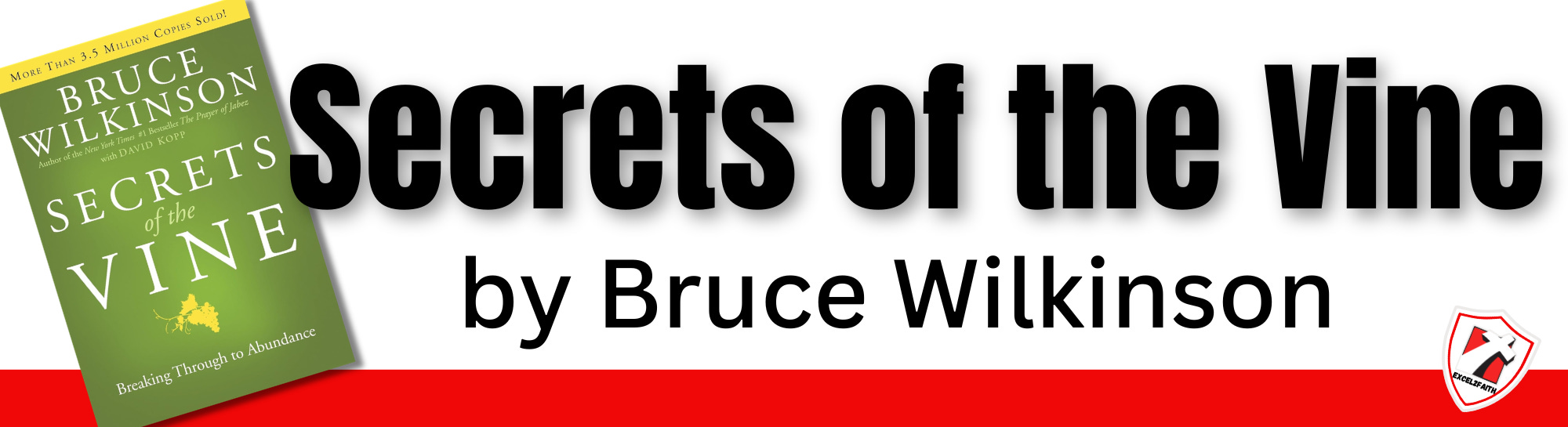
Secrets of the Vine
In Secrets of the Vine, Bruce Wilkinson invites readers into the living imagery of John 15, where Jesus declares Himself the true Vine and we the branches. With warmth and clarity, Wilkinson unpacks what it truly means to abide in Christ—not as religious striving, but as daily dependence on the One who gives life. Through vivid storytelling drawn from real vineyard practices, he explains how God uses seasons of growth, pruning, and even apparent barrenness to cultivate deeper spiritual fruit.
What makes this book especially powerful is its ability to connect theology to everyday life. Just as our recent reflection on abiding emphasized “staying connected” rather than performing for God, Wilkinson reinforces that fruitfulness flows naturally from intimacy with Christ. He helps readers understand that pruning is not punishment but preparation—evidence of a loving Father shaping us for greater impact.
If you long to move beyond surface-level devotion into a steady, life-giving walk with Jesus, this book will both challenge and encourage you.
Consider purchasing Secrets of the Vine today—and subscribe to The EXCEL2FAITH Newsletter for continued encouragement in your journey of abiding in Christ.

Father God, draw my heart away from striving and teach me the quiet strength of abiding in You. When I am tempted to rely on my own understanding or performance, gently remind me that true life flows only from remaining connected to Christ. Awaken in me a deeper hunger for Your presence, and create in me rhythms of prayer that keep my soul rooted and steady. Let my life bear the fruit of intimacy with You, so that every thought, word, and action flows from a heart that walks closely with You each day.