

"Honor the Lord with your wealth, with the first fruits of all your crops; then your barns will be filled to overflowing, and your vats will brim over with new wine." – Proverbs 3:9 10 (NIV)
Money is one of the most practical and sometimes most sensitive areas of life. We need it for our daily needs, but if we're not careful, it can easily become the thing we chase instead of the tool God designed it to be.
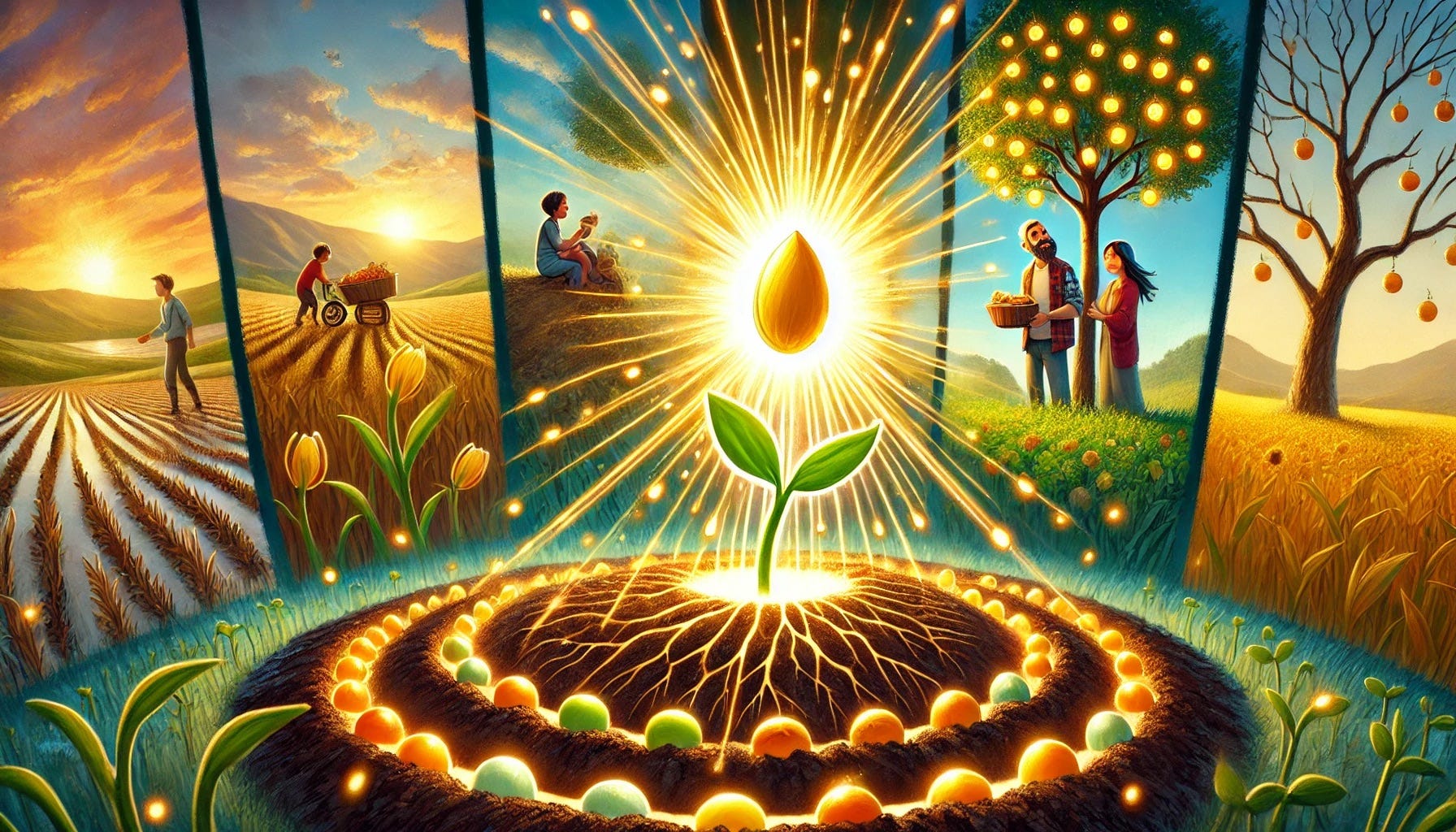
The Bible gives us a powerful picture to help us understand wealth: money is like seed. Just like a farmer handles his seed with wisdom, deciding what to sow, what to eat, and what to store, God calls us to approach finances with the same perspective.
If we learn to treat our money like seed, we'll discover not only how to manage it wisely, but also how to let God multiply it for His glory and our good.
This is why I've created what I call the S.E.E.D. Plan a simple, biblical framework to help us honor God with our money and build a legacy of faith.
God Gives Us the Seed
Everything we have comes from God. Our income, talents, opportunities, and even the ability to work are gifts from Him.
In Deuteronomy 8:18 (NKJV), Moses reminded Israel: "And you shall remember the Lord your God, for it is He who gives you power to get wealth, that He may establish His covenant which He swore to your fathers, as it is this day."
That paycheck in your account? That skill you use at your job? That idea that brings profit? All seed is given by God. The first step in handling finances God's way is remembering that we don't own it; we manage it.
We Only Sow
Our job isn't to force the outcome, it's to sow faithfully. Financial sowing looks like giving, investing, saving, and using money in ways that align with God's principles. We can't predict the markets, guarantee promotions, or control the Future, but we can sow wisely.
Sowing financially means practicing Generosity, tithing, and even wisely investing for the Future. Each decision with our money plants something that will grow later.
God Waters, Lights, and Nourishes the Seed
After sowing comes the part only God can do. He opens doors we didn't knock on, provides opportunities we didn't expect, and stretches what we thought was too little.
Think of the widow in 1 Kings 17 who gave Elijah her last bit of flour and oil. From a natural standpoint, it made no sense. But because she sowed in faith, God sustained her household throughout the famine.
Financial stewardship is never just math; it's faith. God nourishes the seed we entrust to Him.
God Makes the Seed Grow and Multiply
Multiplication is God's specialty. He can take what looks small in our hands and turn it into abundance. Jesus demonstrated this with the five loaves and two fish (John 6), where a small lunch became a feast for thousands when placed in His hands.
Financially, multiplication can look like unexpected favor, new streams of income, or even the peace that comes when God stretches our resources. Our responsibility is faithfulness; God's responsibility is the increase.
We Get to Harvest
The harvest is when our faithful stewardship bears fruit. It could be financial stability after years of debt, it could be seeing your giving change someone's life, or it could be the joy of living without fear of money.
Galatians 6:9 (NIV) reminds us: "Let us not become weary in doing good, for at the proper time we will reap a harvest if we do not give up." Financial harvest often comes slowly, but when it arrives, it's a testimony of God's faithfulness.
We Eat Some of the Harvest
Part of God's design is for us to enjoy the blessings He gives us. There's nothing wrong with enjoying good things, vacations, a home, and celebrations. The key is balance. Just like a farmer eats some of his crops to sustain himself, God wants us to be nourished by what He provides.
We Share Some of the Harvest
The heart of biblical stewardship is Generosity. God blesses us so that we can bless others. Sharing the harvest looks like giving to the church, helping those in need, and supporting kingdom work.
2 Corinthians 9:10 11 (AMP) says: "Now He who provides seed for the sower and bread for food will provide and multiply your seed for sowing and increase the harvest of your righteousness; you will be enriched in every way so that you may be generous."
Notice: God provides seed for sowing AND bread for eating. Both are His design.
We Sow Again
The cycle of financial faith never ends. From every harvest, we decide what to consume, what to share, and what to plant again. The more we repeat this cycle, the more we build a legacy of faith, stewardship, and blessing that can outlive us.
When we view money as seed, we break free from fear and greed. Instead of hoarding or wasting, we become faithful farmers of God's provision.
The S.E.E.D. Plan
To make this simple, here's a framework you can put into practice:
S – Sow Faithfully (tithe, give, invest wisely)
E – Enjoy Responsibly (use what God gives with gratitude and balance)
E – Extend Generosity (bless others with part of your harvest)
D – Develop for the Future (save, plan, and sow again to build a legacy)
This plan is both practical and spiritual, keeping us anchored in God's Word while guiding everyday financial decisions.
Final Encouragement
Friend, your finances are more than numbers in a bank account. They are seeds in God's kingdom. Handle them with wisdom, sow them with faith, and trust God with the increase. Wealth isn't about how much we keep, it's about how much we honor God with what He gives.
When you put the S.E.E.D. Plan into practice, you'll discover that your finances are more than numbers in a bank account; they are seeds in God's kingdom, capable of blessing generations to come.
Putting the S.E.E.D. Plan into Practice
Take one financial step of faith this week. Use the S.E.E.D. Plan as your guide, and write out one small step in each area. And if you'd like more encouragement for your faith and finances, subscribe to the EXCEL2FAITH Newsletter at www.excel2faith.com.

Fill-in-the-Blanks (Quick Reflection Challenge)
Complete the S.E.E.D. Plan by filling in the missing words:
S – Sow ________ (tithe, give, invest wisely)
E – Enjoy ________ (use what God gives with gratitude and balance)
E – Extend ________ (bless others with part of your harvest)
D – Develop for the ________ (save, plan, and sow again to build a legacy)
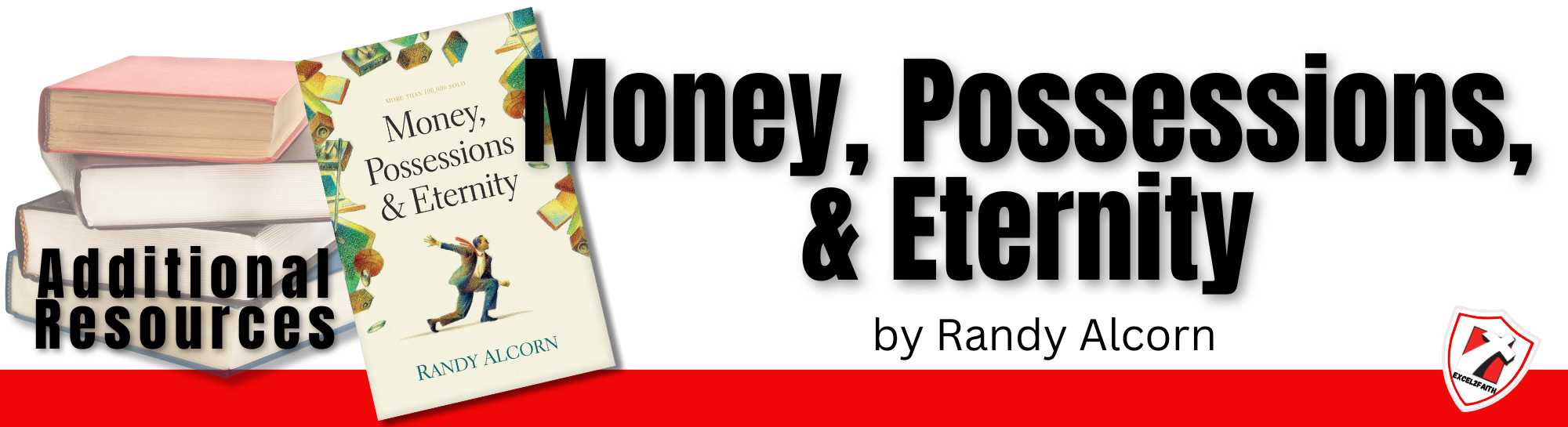
Money, Possessions, and Eternity by Randy Alcorn
Randy Alcorn’s Money, Possessions, and Eternity is more than a book about finances—it’s a life-changing perspective shift. Alcorn reminds us that everything we own is temporary, but how we handle money today echoes into eternity. With biblical depth and practical wisdom, he challenges readers to stop clinging to wealth as if it were ours to keep, and instead view it as a tool entrusted by God to invest in His kingdom.
The themes in this book beautifully mirror the truths we explored in The S.E.E.D. Plan: How to Honor God with Your Wealth and Build a Lasting Legacy. Just as the S.E.E.D. framework teaches us to sow faithfully, enjoy responsibly, extend generosity, and develop for the future, Alcorn expands our vision by showing that eternal rewards come when we hold possessions loosely and give generously. His words remind us that every dollar is like a seed—it can either be consumed today or planted for a harvest that will last forever.
If you’ve ever wrestled with how to balance financial wisdom with kingdom-minded generosity, this book is a must-read.

Heavenly Father, thank You for entrusting me with the seeds of provision, wisdom, and opportunity—help me to steward them faithfully for Your glory. Teach me to sow generously, enjoy Your blessings with gratitude, extend my hand in generosity, and develop habits that build a lasting legacy of faith. When fear or greed tries to take root, remind me that You alone bring the increase and that every harvest comes from Your hand. Lord, draw me closer to You each day, that my relationship with You may grow deeper than any financial blessing I could ever hold.