
“Open my eyes, that I may see Wondrous things from Your law.” Psalm 119:18 (NKJV)
When the Checkmark Became the Goal
I grew up in a pastoral home. My dad was a pastor, and the Bible was woven into our lives through favorite passages, familiar stories, and Scriptures that supported the messages we wanted to share. Yet despite reading it many times, I could not say I had read the entire Bible.
Eventually, I committed to a yearly reading plan. Four bookmarks organized the daily passages and moved me through the Old and New Testaments. I also practiced SOAP: Scripture, Observation, Application, and Prayer, writing about a passage that caught my attention.
Those practices gave me structure and helped me show up consistently. But sometimes I finished the day’s passages and could not remember what I had read. I had completed the assignment, yet wanted more than a checkmark.
That realization became my prayer: “Lord, give me a hunger for Your Word.”
Perhaps you recognize that experience. Forgetting a passage does not mean you have failed God, and a distracted morning does not cancel your devotion. Still, when completion consistently crowds out attention, it is worth asking what your routine is helping you receive.
Bring Your Attention and Your Need
Psalm 119 celebrates God’s instruction as something to cherish, consider, and live by. In verses 15–16 (NKJV), the writer connects meditation with delight and remembering. His attention rests on God’s ways, rather than simply the amount of reading completed.
Then, in Psalm 119:17 (NKJV), he asks God for the goodness that enables him to live and obey. The prayer for opened eyes follows that dependence. Studying Scripture involves both careful attention and humble need. Bible Gateway
We can bring that same posture to a familiar passage. Before asking what it means for our situation, we can slow down enough to notice what is actually there.
The Bereans offer another example. When Paul brought his message to their synagogue, they welcomed it eagerly and examined the Scriptures daily to test his teaching, according to Acts 17:11 (NIV). Their eagerness included thoughtful examination. Questions were part of receiving the message responsibly.
Let Three Questions Slow You Down
Purposeful study can begin with three questions. Try them with Psalm 119:15–18, keeping the sentences together rather than selecting only the line that immediately appeals to you.
First, what do I notice? Identify the actions and requests. The writer meditates, delights, remembers, and asks God for help. Observation gives you something concrete to consider before concluding.
Second, what does it mean here? These verses belong to a prayerful celebration of God’s instruction. The request for opened eyes concerns recognizing its wonders. It does not promise a private message detached from what the passage says.
Third, how should I respond? You might ask God for understanding, then reread the passage and record what it teaches about receiving His instruction. Let your response grow from that meaning.
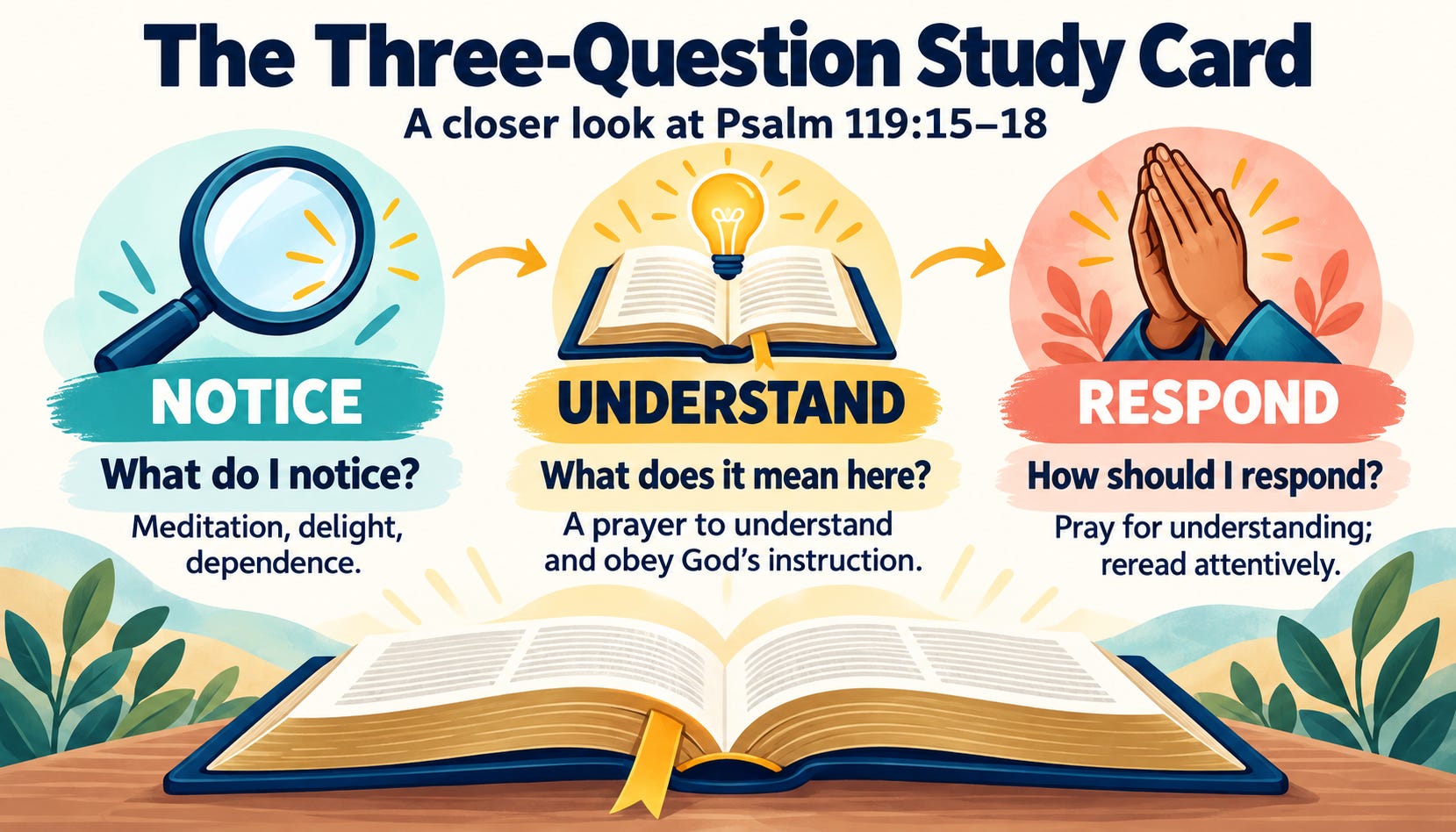
This can deepen SOAP by connecting observation and application firmly to context. A verse may stir strong feelings, but those feelings should send us back to the text with questions. They cannot determine its meaning for us.
You do not have to produce a profound journal entry every morning. Write one honest observation, acknowledge what you still don’t understand, and allow yourself to return tomorrow.
Make Room for Truth to Stay
For me, that desire led to using Logos Bible Study software to explore words, background, and context. I wanted to keep reading while going deeper. You can begin with a Bible and notebook; additional resources can support your study as questions arise.
Paul reminds Timothy that Scripture teaches, corrects, and equips God’s servant for good work in 2 Timothy 3:16–17 (NIV). Understanding should shape our choices, including how we speak to family, handle frustration, or respond to correction. Bible Gateway
Yet deeper study also needs a clear center. In John 5:39–40 (NIV), Jesus confronts people who diligently searched Scripture while refusing to come to Him for life. Knowledge alone cannot substitute for receiving Christ and trusting Him. Bible Gateway
As the new year approaches, I hope to study one book, perhaps Romans, more deeply while continuing my daily reading and SOAP journal. Breadth and depth can grow together.
Today, return to one passage from your reading. Spend five minutes answering the three questions, then pray about what you have understood. Give God’s Word your patient attention, even when insight comes slowly.
Lord, renew our hunger for Your Word and open our eyes to understand it faithfully. Draw us closer to Christ and help us live what You teach us.
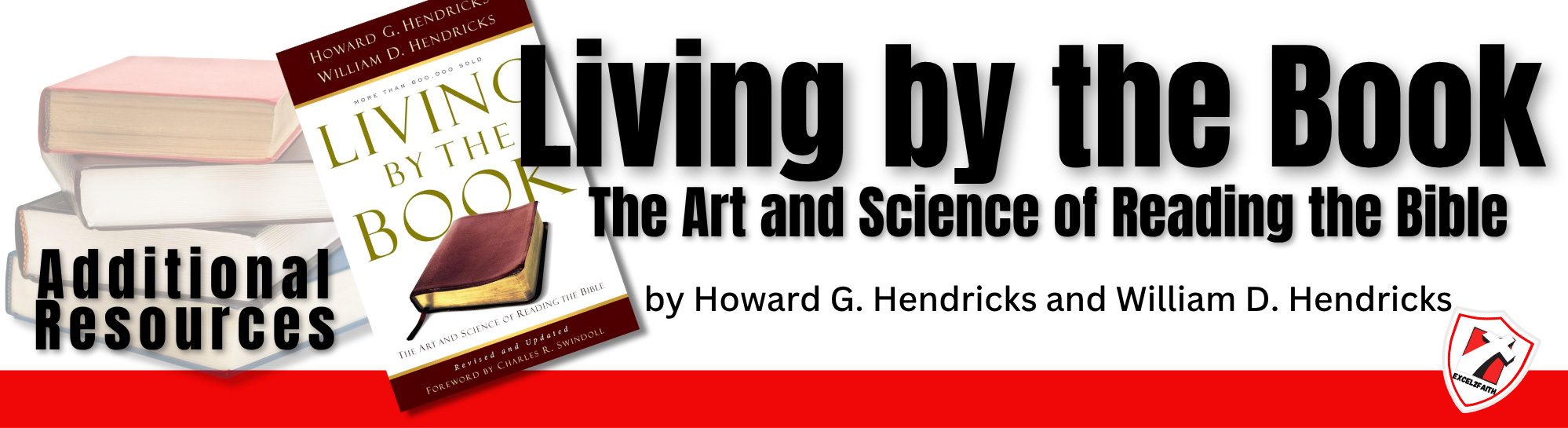
Have you ever closed your Bible and wondered what you absorbed? Living by the Book by Howard G. Hendricks and William D. Hendricks offers a practical way to approach Scripture with greater attention, understanding, and purpose.
The authors organize Bible study around three steps: observation, interpretation, and application. Observation begins with looking carefully at what the passage says. Interpretation asks what those details mean within their context. Application invites readers to consider how that truth should shape their lives.
This progression makes the book a fitting companion to “Stop Reading the Bible on Autopilot.” Our article introduces three questions that help us slow down; the Hendrickses provide a fuller guide to developing those habits. Their approach encourages readers to engage Scripture thoughtfully instead of depending entirely on someone else’s explanation.
What makes this book worth reading is its combination of clear instruction and practical purpose. It helps turn the desire for deeper study into something you can begin practicing, whether you are exploring unfamiliar passages or revisiting cherished ones.
Let your prayer for renewed hunger lead to purposeful engagement with God’s Word. Purchase Living by the Book, and subscribe to The EXCEL2FAITH Newsletter for encouragement in your walk.


Heavenly Father, when we rush through Your Word or struggle to remember what we have read, meet us with Your grace and awaken a deeper hunger to know You. Open our eyes to understand Scripture faithfully, quiet our distracted hearts, and help us receive Your truth with patience and humility. Draw us into prayer throughout the day, teaching us to bring You our questions, burdens, and gratitude as we grow closer to You. By Your Spirit, let what we study take root in our lives, shaping our choices and deepening our love for Jesus, in whose name we pray, amen.