


“See what great love the Father has lavished on us, that we should be called children of God! And that is what we are!” (1 John 3:1, NIV)
There’s a quiet ache many people carry, one that whispers, Do I belong? It can show up in subtle ways: striving for approval, fearing rejection, or feeling like an outsider even in familiar spaces. Though life may look full on the surface, the heart can still wrestle with a deep sense of spiritual loneliness.
This May, the Identity in Christ series invites you into a different story, one not built on performance, but on promise. Together, we’ll walk through what it truly means to be known, chosen, forgiven, and secure in God. Each week will peel back layers of doubt and replace them with the steady truth of who God says you are.
We begin here, at the foundation: moving from an orphan mindset to living fully as a child of God.
The Invitation to Belong
The idea of God as Father can feel comforting to some and complicated to others. In the ancient Roman world, where much of the New Testament was written, adoption carried profound meaning. An adopted child was intentionally chosen and granted full rights as a biological heir, including inheritance and the right to use the family name.
This is the backdrop of Paul’s words in Romans 8:15 (NIV): “The Spirit you received does not make you slaves, so that you live in fear again; rather, the Spirit you received brought about your adoption to sonship. And by him we cry, ‘Abba, Father.’”
“Abba” is an intimate term, closer to “Dad” than a distant title. It reflects not just authority, but closeness. God doesn’t invite you into a formal relationship marked by fear; He welcomes you into a family marked by love.
Yet many believers still live as if they’re on the outside, trying to earn a place that has already been secured.
Leaving the Orphan Mindset Behind
An orphan mindset isn’t about physical status; it’s a spiritual posture. It says, I have to earn love. I must prove my worth. I’m on my own. Even after coming to faith, these patterns can linger.
But Scripture gently dismantles this way of thinking.
Ephesians 1:5 (NLT) says, “God decided in advance to adopt us into his own family by bringing us to himself through Jesus Christ. This is what he wanted to do, and it gave him great pleasure.”
In the historical context of Paul’s letter to the Ephesians, believers were surrounded by a culture of status and hierarchy. Yet Paul emphasizes that God’s choice is rooted not in human merit, but in divine desire. Adoption wasn’t an afterthought—it was always part of God’s plan.
This means your place in God’s family is not fragile. It doesn’t depend on your best day or your worst mistake. It rests on His unchanging will.
Learning to Live as a Child
Understanding your identity is one thing; living from it is another. The transition from orphan to child is often a journey, not a single moment.
Consider Galatians 4:6–7 (NIV): “Because you are his sons, God sent the Spirit of his Son into our hearts, the Spirit who calls out, ‘Abba, Father.’ So you are no longer a slave, but God’s child; and since you are his child, God has made you also an heir.”
Paul wrote this to a church tempted to return to rule-based religion. His reminder is clear: identity comes before behavior. You don’t act like a child to become one—you are a child, and your life begins to reflect that truth.
This shift changes everything. Prayer becomes conversation, not performance. Obedience becomes response, not obligation. Even correction becomes an expression of love, not rejection.
Anchored in a Father’s Love
One of the greatest barriers to embracing this identity is fear, fear that we will be abandoned, overlooked, or replaced. But God’s love doesn’t operate like human love.
Psalm 68:5 (NIV) describes God as “A father to the fatherless, a defender of widows.” In its original setting, this psalm celebrates God’s care for the vulnerable and marginalized in Israelite society. It reveals His heart: He moves toward those who feel forgotten.
And in John 1:12 (NIV), we’re given a powerful promise: “Yet to all who did receive him, to those who believed in his name, he gave the right to become children of God.” Written in a context where many questioned Jesus’ authority, this verse affirms that belonging to God is not about heritage or status, it’s about receiving Christ.
You are not a distant follower trying to get closer. Through Jesus, you have already been brought near.
Stepping Into Your True Identity
Living as a child of God doesn’t mean life becomes perfect, it means you no longer walk through it alone or uncertain of your place. When insecurity rises, you return to truth. When failure happens, you return to grace. When doubt whispers, you return to the Father.
Take a moment to reflect:
Where have you been striving instead of resting?
Where have you felt like an outsider instead of a beloved child?
Let this be the beginning of a shift—not just in what you believe, but in how you live.
Walking It Out This Week
Let this truth move beyond reflection and into rhythm. Over the next few days, set aside a few quiet moments to intentionally speak to God as your Father. Not with polished words or perfect structure, but with honesty. Pay attention to how your heart responds when you approach Him not as a distant authority, but as a loving and present Father.
A Glimpse of What’s Ahead
As we continue this journey next week, we’ll explore what it means to be redeemed and restored, stepping fully into the freedom Christ has already secured. If this week is about belonging, next week is about release: letting go of shame and embracing the fullness of forgiveness.
A Simple Prayer
Father, reshape my heart to truly believe I belong to You. Help me walk daily in the security of Your love and the freedom of being Your child. Amen.
If this message encouraged you, consider subscribing to the EXCEL2FAITH Newsletter and continue growing deeper in your faith journey.
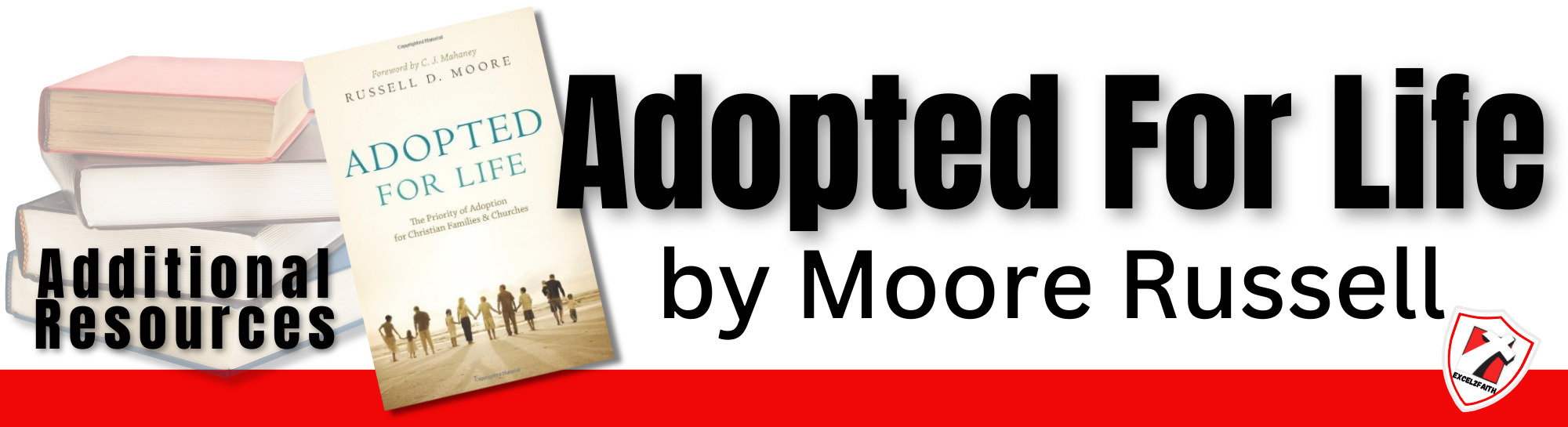
What does it truly mean to belong, not temporarily, not conditionally, but fully and forever? In Adopted for Life, Russell D. Moore beautifully answers this question by weaving together the gospel and the powerful reality of spiritual adoption. This book is more than theology; it’s an invitation to see yourself no longer as an outsider, but as a deeply loved child of God.
Moore draws from both Scripture and personal experience to show that adoption is at the very heart of the Christian faith. He reminds readers that God doesn’t merely forgive us—He brings us into His family, giving us a new name, a new identity, and a secure place to belong. This message resonates deeply with the truth explored in “From Orphan to Child of God,” where we are reminded that we are no longer striving for acceptance but living from it.
With warmth and conviction, Moore challenges the orphan mindset, the subtle belief that we must earn love, and replaces it with the freeing truth of grace. Every page calls you to rest in the Father’s love and live confidently as His child.
Discover the life-changing truth of your identity—grab your copy of Adopted for Life today and begin embracing your place in God’s family. For more faith-building content, subscribe to the EXCEL2FAITH Newsletter

Father, thank You for calling me out of striving and into the security of being Your child, chosen and deeply loved. Teach my heart to trust You more, to rest in Your presence, and to approach You with the confidence of one who truly belongs. When I forget who I am, gently remind me that I am Yours—not by performance, but by grace. Draw me closer each day, Lord, that my relationship with You would grow deeper, more personal, and rooted in Your unfailing love.